
Two drones cross into Finnish airspace near Virolahti
Two drones crossed into Finnish airspace near Virolahti and off Hamina in the early hours of May 3, 2026, then exited toward Russia; investigators later attributed them to Ukraine.
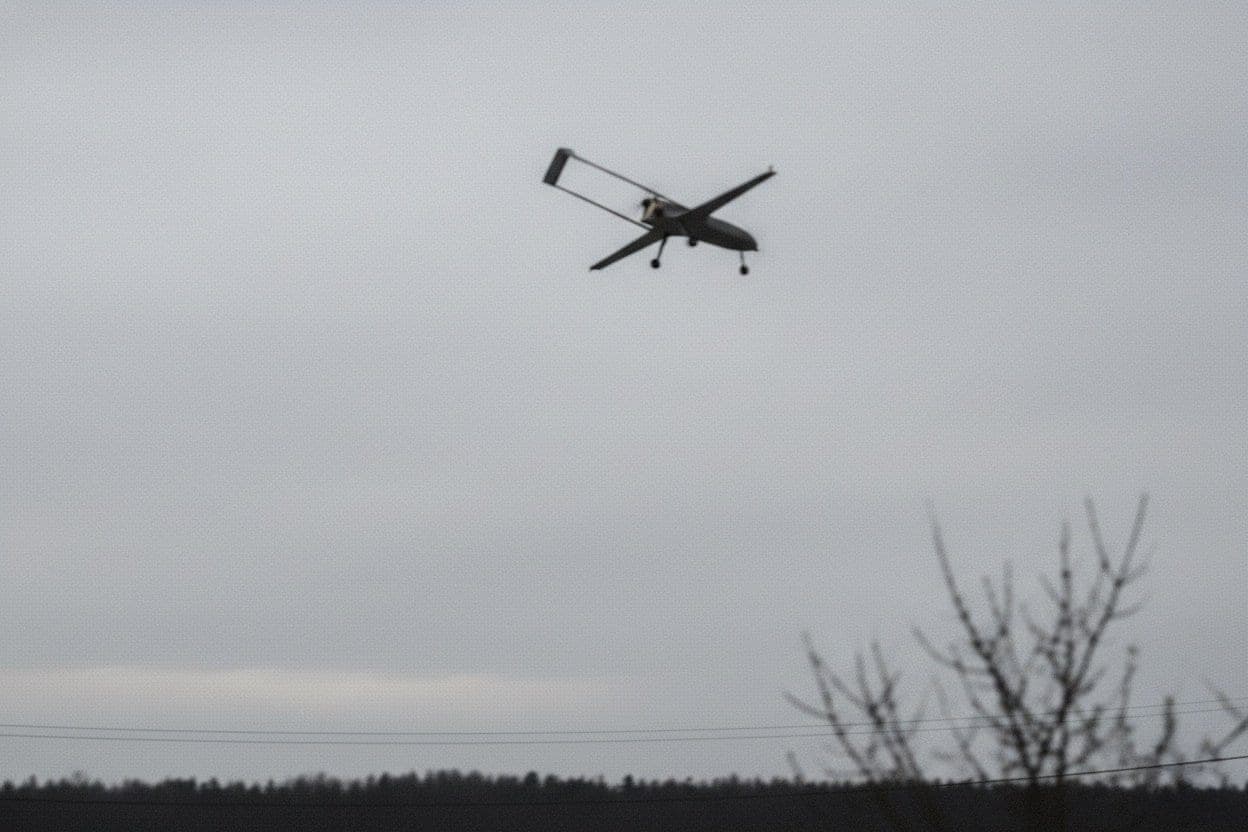
Finland's Air Force detected a drone crossing into national airspace near Virolahti, close to the Russian border, in the early hours of May 3, 2026, per a Finnish Defence Ministry statement carried by AFP. "The model and origin of the drone have not been identified," the ministry said at the time, adding that the aircraft was no longer in Finnish airspace. The Finnish Border Guard opened an investigation.
A second drone and a preliminary Ukraine finding emerged two days later
The initial report understated the incident's scope. The Finnish Border Guard said on 5 May that a preliminary inquiry had identified two drones, not one, detected in the early hours of 3 May near Virolahti and in waters southeast of Hamina, both close to the Russian border, per Helsinki Times. Authorities tracked the aircraft moving from south to north-east before they exited Finnish airspace into Russian territory. The evidence pointed to Ukraine as the drones' origin - a preliminary finding, not a final one, and the Border Guard said its investigation would continue.
The timing coincided with a Ukrainian strike on a Russian oil port
The drones crossed Finnish airspace the same night Ukraine reportedly struck the Primorsk oil port in Russia, located near the Finnish border, per Helsinki Times; authorities did not confirm any direct link between the drones and the strike. Russia's own Ministry of Defence separately said its air defenses intercepted 334 Ukrainian drones that night across roughly 15 regions, some near St. Petersburg, about 150 kilometers from Virolahti, per AFP.
The incident followed a run of four earlier drone cases that reached the ground
It was not the first time a Ukrainian drone had gone astray over Finland: in March 2026, Ukraine apologized to Helsinki after two Ukrainian drones crashed in southern Finland, believed to have been knocked off course by Russian interference. Helsinki Times reported that Finland had logged four drone cases in the months before the Virolahti incident - three in March and one in April, in the municipality of Iitti - all of which reached the ground, unlike the 3 May pair, which exited Finnish airspace under their own flight rather than crashing. Finland's National Bureau of Investigation and the Border Guard formed a joint team to examine the pattern; police are treating the broader case as aggravated endangerment, while the Border Guard leads the airspace-violation inquiry specifically.
Wind data for this window was not available
AirVeto's wind model returned no data for the Gulf of Finland region on May 3, 2026 across multiple pressure levels and grid points tested - a gap in the underlying archive for this specific date, not a location or altitude issue traced to this incident. This reconstruction is based on reporting by Macau Business (AFP) and Helsinki Times, without a wind-drift component. AirVeto's model and its documented limits are on the methodology page.
Related location
- Gulf of Finland - Baltic Sea arm separating Estonia from Finland, bounded to the east by Russia - GPS-spoofing reports and stray drones.
- Finland - Finland shares a 1,340-kilometer border with Russia and recorded four drone finds in spring 2026 - the densest EW-diverted drone cluster in any NATO member state that period.