
Romanian F-16 downs drone near Buzău, first over Romania
Romania's first drone intercept in its own airspace: F-16 from the 86th Air Base shot down an unidentified drone near Padina, Buzău county at 11:02 EEST on July 24, 2026.
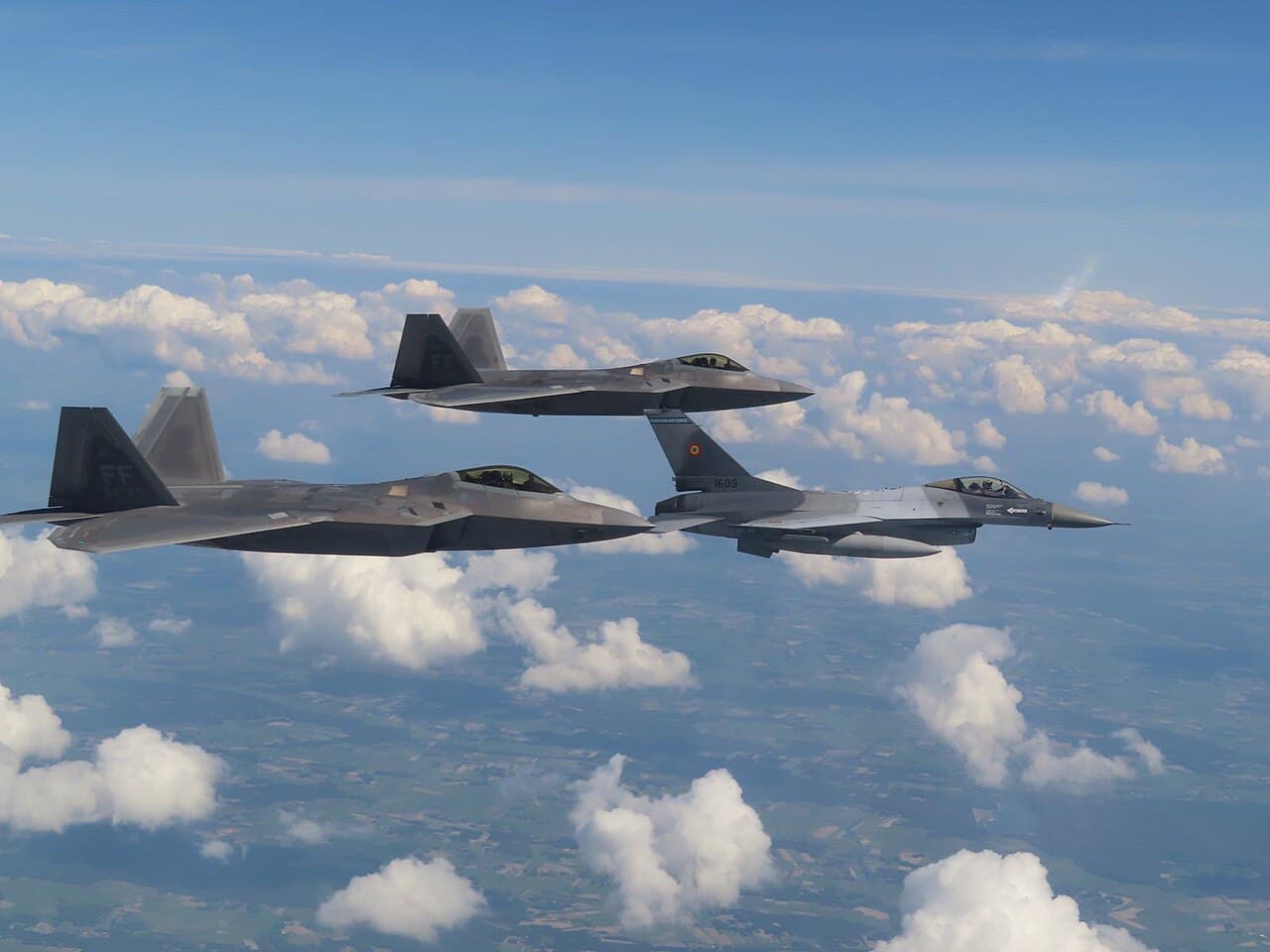
At 09:39 EEST (06:39 UTC) on Friday, July 24, 2026, Romania's Ministry of National Defence radar network detected an unidentified aerial target approximately 20 km east of Sulina, at the eastern edge of the Danube delta, after it entered Romanian airspace. An F-16 from the 86th Air Base at Fetești was already conducting an air policing mission. At 11:02 EEST (08:02 UTC), the pilot engaged the drone with an air-to-air missile and shot it down over an uninhabited area near Padina village in Buzău county. The drone's origin had not been identified as of the initial reporting.
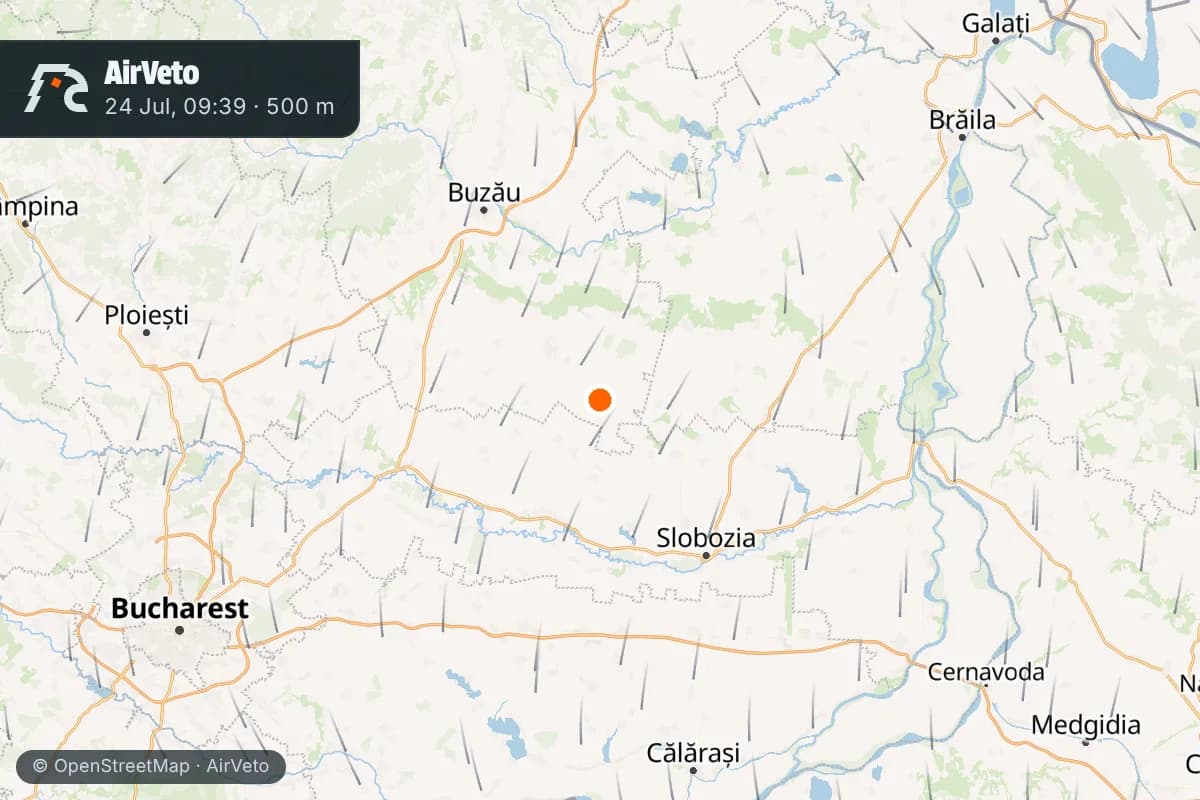
AirVeto's wind-model data for the event window: At 07:00 UTC on 24 July - during the intercept window - the 500 m layer over the Danube delta and Buzău county showed NE wind at 17 km/h.
It was the first time a Romanian combat aircraft had shot down a drone over Romanian territory.
Romanian President Nicușor Dan confirmed the intercept the same morning:
"In around 11:00 this morning, a Romanian pilot flying an F-16 shot down a drone that had entered our country's airspace. The area was uninhabited, so the pilot was able to fire without any risk. Teams from the relevant institutions are now investigating the area to establish all the details of the incident."
Interim Defence Minister Radu Miruță confirmed the activation of air defence procedures and said the drone's origin remained under investigation.
The intercept: timeline and aircraft
Romania's surveillance network detected the target at 09:39 EEST at the Danube delta entry point, approximately 20 km east of Sulina. The Ministry of National Defence's official timeline places the entry point and the subsequent tracking along a flight path oriented toward Brăila, Fetești, and Buzău - a westward transit of over 200 km from the delta to the shoot-down point in Buzău county.
Two Romanian Air Force F-16s from the 86th Air Base at Fetești, alongside two Italian Air Force Eurofighter Typhoons operating from Mihail Kogălniceanu air base in Constanța, were scrambled to monitor and intercept the target. The 86th Air Base is the principal Romanian F-16 base; Mihail Kogălniceanu hosts Italian jets deployed under NATO enhanced Air Policing arrangements.
The F-16 pilot fired a single air-to-air missile at 11:02 EEST. The drone came down in an uninhabited area near Padina, a commune in the southeastern part of Buzău county, roughly 200 km west of the entry point and approximately 100 km north of Buzău city. No civilian casualties were reported.
Drone origin: unidentified as of reporting
Romania's Ministry of National Defence did not identify the drone in its initial statement. Defence Minister Miruță said surveillance systems had detected the target and triggered standard air defence procedures, but that establishing all the circumstances and identifying the object was the purpose of the ongoing investigation at the crash site.
Romania lies directly south of the Ukrainian Danube front, a zone that has seen repeated Russian Geran-2 (Shahed-136 derivative) drone traffic during strike waves against Ukraine's port and logistics infrastructure. Multiple drones have entered Romanian airspace, crashed on Romanian territory, or come down close enough to the border to prompt alerts since 2023. Without confirmation of the drone type from Romanian authorities, attribution remains open.
A pattern of drone incursions into Romanian airspace
The 24 July shoot-down is the sharpest response in a series that began building through 2025 and accelerated in early 2026:
- November 2025 - Grindu, Tulcea county. A drone came down in a field near Grindu village - see the Grindu drone crash.
- November 2025 - Puiești, Vaslui county. A drone was recovered in the Puiești area - see the Puiești crash.
- April 2026 - Bariera Traian, Galați. A Russian Geran-2 entered Romanian airspace from the direction of Reni, Ukraine, flew approximately 15 km over Romanian territory, and crashed in a residential district of Galați, damaging a farm outbuilding and an electricity pole. No injuries. RAF Typhoons and Romanian jets scrambled - see the Galați Bariera Traian incident.
- May 2026 - Bulevardul Brăilei, Galați. A second Geran-2 hit a 10-storey apartment block, injuring two civilians. Romania expelled the Russian consul general in Constanța in response - see the Galați May 2026 strike.
Before 24 July, Romanian and NATO jets had scrambled multiple times in response to drone threats entering Romanian airspace but had not shot down an intruder over Romanian territory. The July intercept marks a change in the operational response.
Wind conditions over the transit route
At 07:00 UTC on 24 July - during the intercept window - the 500 m layer over the Danube delta and Buzău county showed NE wind at 17 km/h. At 2,000 m the wind shifted to NW at 15 km/h; at 3,000 m NW at 16 km/h. The area was calm by regional standards: no significant convective activity, light and backing winds with altitude.
AirVeto's wind layer covers the full Sulina–Padina route. The entry point east of Sulina and the shoot-down near Padina sit roughly 200 km apart. How the model is built and where it is reliable is on the methodology page.
The reconstruction above draws on reporting by Romania Insider, RTÉ, Euronews, Kyiv Post, and Daily Maverick, and on AirVeto's wind-model data for the 06:39–08:02 UTC window on July 24, 2026. A full archive of drone and airspace incidents across the EU's eastern border is at incident archive.
Related location
- Romania - Romania, a NATO member since 2004, shares a Danube-river border with Ukraine at the Black Sea delta and has repeatedly recorded drone debris, intercepts, and naval-drone incidents along that frontier and its Black Sea coast since September 2025.
Sources
- Romania Insider - F-16 downs drone in Romania's airspace for first time (July 24, 2026)
- RTÉ - Romania shoots down drone breaching its airspace (July 24, 2026)
- Euronews - Romania says F-16 shot down drone over the country's airspace (July 24, 2026)
- Kyiv Post - Romanian F-16 Downs Unidentified Drone During Russian Strike on Ukraine (July 24, 2026)
- Daily Maverick - Romania shoots down drone breaching its airspace, president says (July 24, 2026)
- Methodology